


The Franchise-Ready Playbook


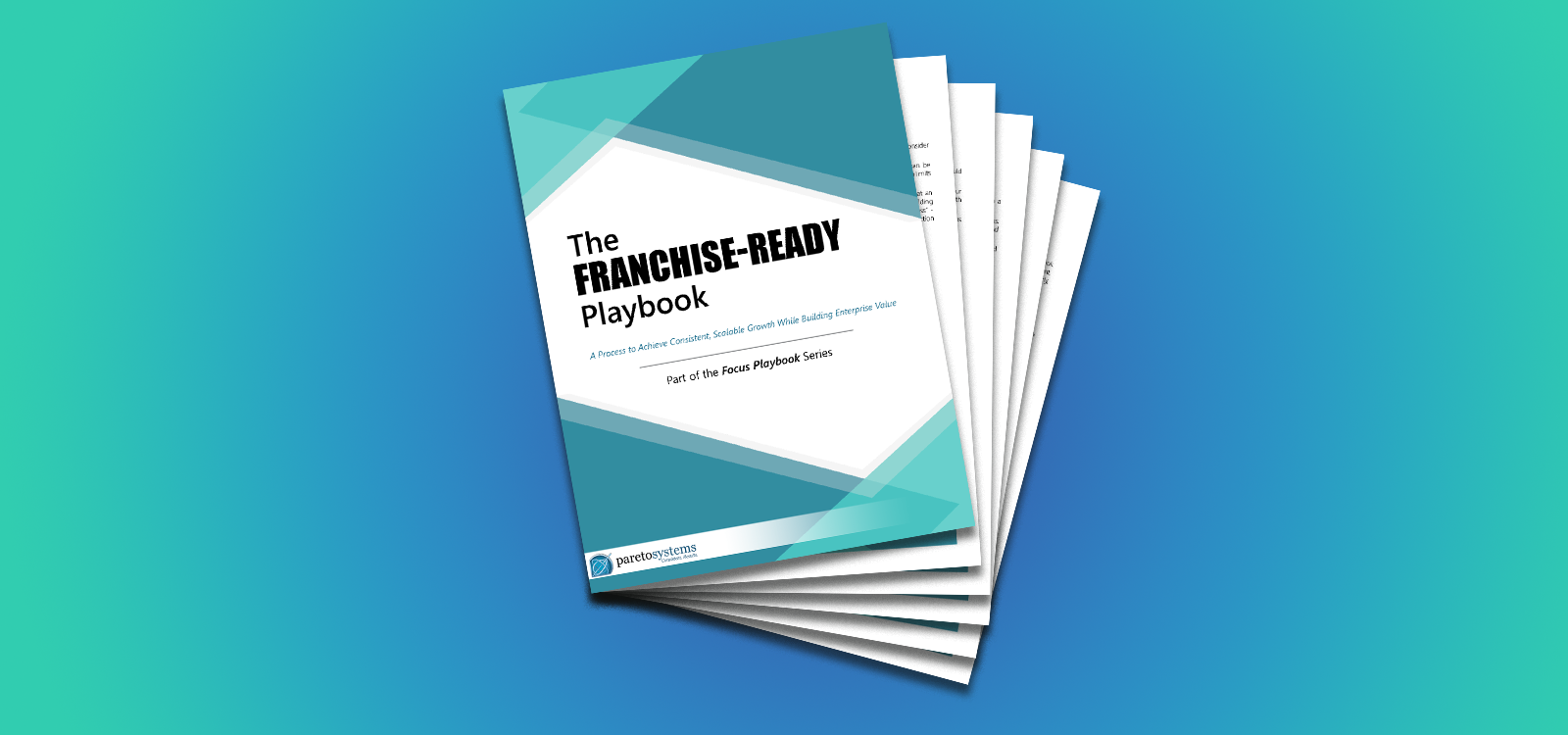
A Process to Achieve Consistent, Scalable Growth While Building Enterprise Value
Financial Advisors: Go From Working IN to Working ON Your Business
Once a successful financial advisor has achieved consistent, sustainable organic growth, the natural next step is to consider scalable, acquisition-based growth.
Increasingly, we see top professionals transform their proven best practices into intellectual properties that can be deployed repeatedly. This is what it means to turn a book of business into an actual business; a business that has no limits and achieves steadily improving enterprise value.
Bestselling author Michael Gerber captured this idea beautifully in his book The E-Myth. His core premise is that an entrepreneur must shift from having a job where they sell something (ultimately trading time for money) to building something that has many multipliers in terms of efficiency and value. It is easy to get bogged-down in "busyness - transacting services - rather than building a business that puts you on a track to a meaningful and measurable inflection point.
Demographics Drive Advisor and Client Transitions
There is a massive group of current advisors who are five years or less from a planned exit. This community is thinking about how to take at least some money off the table, or to fully monetize the equity value of their business. The enlightened also want to ensure their clients are well taken care of once a transition takes place.
There is essentially a "2-for-1 benefit to this. While the advisor is planning a transition, there are also many clients of financial advisors who have their own continuity and succession issues. When someone becomes financially independent their concerns shift from "will I have enough? to "what becomes of my legacy?" Who better to become indispensable to that client with a new, unmet need than an advisor who has addressed the same concern themselves?
In addition to the many advisors on the home stretch, there are two other addressable markets. First, you have a large group of advisors who are not looking to leave the business but are frustrated by the friction that compliance and commoditization present. This group longs to draft behind an advisor with turnkey and all-encompassing procedures that liberate them to do what they enjoy - interacting with clients and not getting bogged down in minutiae.
Second, you have advisors who want to transition to a work-optional lifestyle and decide to disassociate from a large block of clients to focus on a smaller group of ideal clients while pursuing other interests in life. It is common to see a process-driven advisor acquire remnants of client lists and squeeze a lot more juice out of the orange through an elevated client experience. Granted, the bar may have been low due to neglect by the former advisor, but the elevation and lift are both immediate and measurable.
Get Started
So where does an aspiring franchise-ready advisor start? To paraphrase Michael Gerber again, every business should be built to be sold for maximum value - even if you have no intention of selling it.
In other words, get in front of franchise readiness even if the only immediate benefits are competitor-proofing your existing clients and restoring liberation and order to your life. Then decide if you want to deploy your scalable growth model.
Many advisors share common goals and ensuring that all are met requires a deep understanding of the issues teams and advisors face. Most aspire to achieve many, or all, of the following:
Common Financial Advisor Goals
- Increase growth in revenue, referrals and AUM
- Increase the enterprise value of the business
- Build systems to ensure scalability, consistency and franchise-readiness
- Build a legacy and brand for yourself, your business and your clients and partners
- Ensure high advisor and client retention rates
- Shift from organic to scalable growth
Think about it for a moment: If you have many messengers, how do you ensure that the message and process remain consistent? How do you ensure that each office and advisor or assistant is representing the firm in a congruent and compelling way and without dilution?
To accomplish these goals, beginning with the end in mind, Pareto Systems has developed and refined a process that enables firms to create a structured playbook so that they can become "franchise-ready and scale predictably across the entire business. The process is incremental and builds upon itself, and we have witnessed its results time and time again.
Put simply, there are three steps in our process to accomplish all this, each of which we'll go into in depth. They are:
- The Gap Analysis
- Creating The Playbook
- Launch And Implementation
What IS Franchise-ready?
Have you ever considered why a bank would prefer to offer a loan to a franchise restaurant business rather than a standalone startup bistro?
It's simple. The bank knows the franchise has a product that is guaranteed by a solid, tested, proprietary process. Success is not dependent on maverick talent or personality, nor are the owners left to their own devices. It's planned and documented in a professional procedures manual and system.
When you build a playbook for your practice and organization, you increase the enterprise value of the business and make it far more appealing to an investor, buyer or client.
Gap Analysis
Get Clear On Your Business Gaps
For a financial advisor team, the starting point is gaining clarity on where you are today and where the opportunities exist.
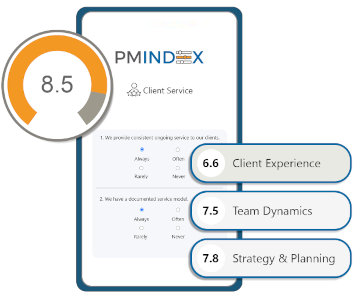
This begins with a structured gap analysis that advisors can complete themselves using the Practice Management Index (PMIndex) assessment.
The PMIndex evaluates current practice management and relationship management processes at both the team and individual level. It helps identify untapped opportunities, overlooked vulnerabilities, and unmet needs across how you engage clients, operate as a team, and apply best practices.
The assumption is not that anything is broken. In most cases, advisors and teams are already doing many things well. The value of the exercise is in identifying the gaps, where small adjustments can lead to meaningful improvements.
The insights from the PMIndex create a clear and actionable roadmap for building or refining your playbook. It helps prioritize where to focus, what to improve, and how to move forward with intention.

Within any team, there will be varying degrees of gaps across advisors and roles. To simplify this, think of your practice as a combination lock. There are three critical areas that need to align to unlock the full potential of the business, and most teams have gaps in each to some degree:
1: The Investment Management Process
An advisor's or firm's financial solutions and core competencies. The majority will be strongest in this area, but improvements can usually be made by streamlining allocation of service under the 80/20 rule.
2: The Practice Management Process
A professional advisor runs their business like a business and creates an impeccable client experience through best practices. Firms do this on a broader basis. Additional confidence and consistency grows when advisors understand they are in business for themselves, but not by themselves.
3: The Relationship Management Process
A financial advisor's referability is driven by how clearly they articulate their value and how consistently they communicate it to clients and strategic partners. This is achieved through stewardship, not salesmanship. The focus must move away from products, pricing, and performance, and toward philosophy, planning strategy, and process.
That message must be delivered clearly and consistently by everyone across the organization. Consistency in messaging, process, and positioning is critical, and often the weakest link. The goal is to create advocates who understand your value, internalize it, and share it with others.
The quality of client relationships has a greater impact on productivity and enterprise value than anything else an advisor does. Technical knowledge is important, but it is not proprietary. Your client relationships are. They are the most valuable asset in your business.
While you manage money, you are also managing relationships at both the individual and enterprise level. That responsibility is just as important.
Create the Playbook: The Tip of the Spear
As we said, to address these gaps and achieve their goals an advisor needs to create a scalable and predictable playbook among all offices and staff, so that - no matter how many messengers - the message and the process remain consistent. Good intentions are not enough. A playbook can't reside in someone's head. It must be refined and reviewed regularly, and it must have team-wide buy-in.

A Deeper Dive - Building Your Playbook
Once gaps are defined, the playbook you will build ensures that you will have a clear roadmap on:
Refining Your Branding and Communication
Your brand is not your logo. It is how your clients describe you when you are not in the room. The question is simple: Can you clearly and compellingly articulate your value?
Most advisors struggle here. They default to explaining what they do rather than why it matters. When that happens, clients focus on cost instead of value. A strong playbook forces you to define:
- Who you serve best
- What you do differently
- Why it matters to your clients' lives
Your New Client Process
Growth without process creates inconsistency. Consistency is what builds trust. Your playbook should clearly define how a new client moves through your business from introduction to onboarding to advocacy. This is not about overhauling everything. In most cases, advisors are already doing many things well. The opportunity is in refinement.
If you are doing 7 out of 10 things right, the goal is to identify the 3 or 4 missing elements that will elevate the entire experience. Key questions to address:
- Do you have a documented onboarding process?
- Do you provide an introduction kit that educates, not sells?
- Do you know the purpose of each of your meetings?
- Do you use structured agendas in every meeting?
- Do you have a defined welcome process that builds early momentum?
Organizing Your Clients
Not all clients are equal, and they should not be treated the same. One of the most impactful shifts an advisor can make is moving beyond traditional client segmentation based solely on assets or revenue. A more meaningful approach includes:
- Attitude
- Engagement
- Advocacy
This allows you to answer a critical question: Are you spending time with clients who need you or clients who deserve you? Your playbook should define how clients are classified and how your time, energy, and resources are allocated accordingly.
Elevating the Client Experience
Consistency is the foundation of a great client experience. Without a defined service model, service becomes reactive, uneven, and dependent on memory or urgency. A playbook establishes:
- A structured service calendar
- Defined touchpoints throughout the year
- Clear deliverables for each client segment
- Defined roles and responsibilities for each service
Professionalizing and Standardizing Your Business
At its core, a playbook is about turning a practice into a business. That requires documentation, systems, and accountability. Every key process should be defined:
- How clients are onboarded
- How meetings are conducted
- How follow ups are handled
- How service is delivered
Strengthening & Reframing Existing Client Relationships
Many advisors spend most of their time focused on new opportunities while under-leveraging their existing relationships. Your current clients are your greatest asset but only if the relationship is positioned correctly. A playbook helps you reframe those relationships:
- From transactional to strategic
- From reactive to proactive
- From service provider to trusted partner
This often requires a reset.
Launch and Implementation
From Intent to Implement

The Necessity of Buy-In
You can't overestimate the value of gaining others' support to create real change. Buy-in is critical to making any organizational change happen. Many people reject the concept of change out of fear, and you may need to assuage that fear by showing what's possible to move advisors from "intent" to "implement".
The usual stumbling block is that we need others to be open to our ideas, but we go to them intending to sell them an idea. If they feel sold to, they are more likely to ignore our message. They may nod and agree, but they are not likely to support or deeply adopt anything new. How do you combat this?
Real buy-in takes involvement. We use a process to ensure advisors and firms come to their own conclusions through the enterprise or individual gap analysis. It invites discussion, debate, and allows everyone to feel vested in the outcome; it doesn't "sell" an idea, it's a Socratic process of asking questions to allow advisors to reach their own understanding.
Buy-in can be elevated by showing the benefits clearly to the advisory teams. Understanding the concepts and processes deeply so you can clearly explain both the why and the how of the processes is vital. So is tackling implementation sequentially in ways and on a schedule that keeps advisors bought-in and working forward at a reliable pace - but it's vital that they first reach the conclusion that they can elevate their process.
Working with a motivated core of early adopters as a first step to wider buy-in is a great plan. When teams that may not be as advanced or skillful witness the results of others it is far more likely they will improve through the adoption of your playbook's processes.
Take Action
Are you an advisor looking to increase growth? To increase enterprise value? To build systems and franchise readiness? To ensure a legacy and brand? To attain high advisor and client retention rates?
Do these goals resonate with you?
If your answer is "yes", then contact Pareto Systems and we can discuss specific options for your business.