


The Simple Testimonial Policy Template for Financial Advisors


Help Remove the Compliance Friction from Client Testimonials
Financial advisors can now use client testimonials under the SEC Marketing Rule, which is a powerful way to validate and communicate their value with potential clients. It's an exciting prospect, but many firms still hesitate to get started. The reason is understandable. Testimonials can feel like a compliance burden before they ever become a marketing strategy.
But it does not have to be complicated.
With prospective clients doing more research than ever before, your reputation can make the difference. People want to know what it's like to work with you. They want proof of process. They want validation from people who have already experienced your advice, service model, and client experience. They want a story, not just facts.
That is where testimonials can become a powerful trust builder.
Testimonials are valuable. That's understood. The challenge is creating a clear, written policy that gives your team confidence and gives your compliance department a practical starting point in attracting and handling them.
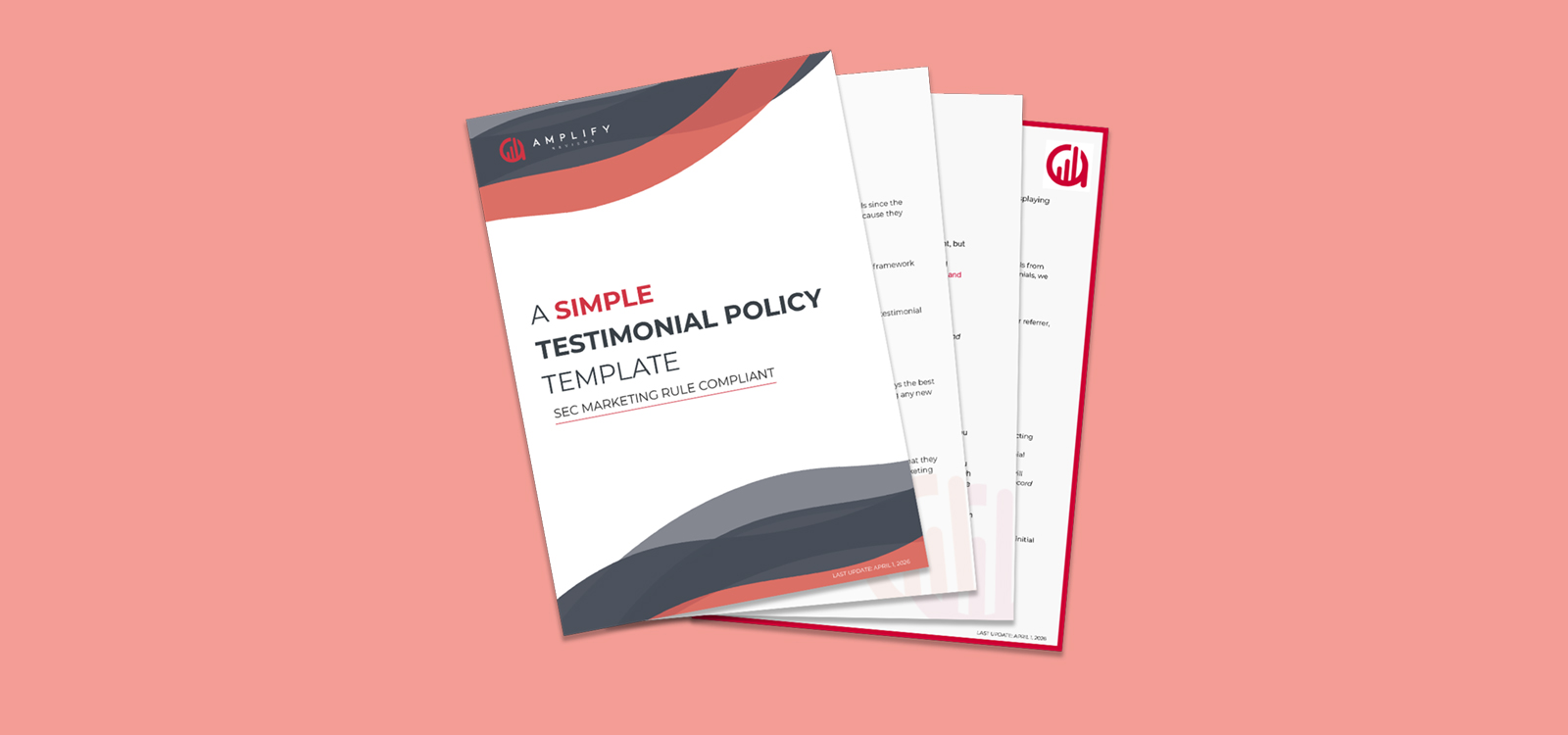
That is why we created the Testimonial Policy Template.
Why Advisors Still Hesitate
Many advisors know testimonials are now available as a marketing tool, but they still avoid them because they assume the process will be too complex.
Some of the concerns financial advisors have are:
- What disclosures are required?
- Who can provide a testimonial?
- Can we use Google reviews?
- Can we compensate clients?
- What needs to be documented?
- What will compliance expect to see during a review?
These are valid questions but should not become permanent obstacles.
A clear policy can simplify the process, prepare your team, and create a framework that supports compliant implementation.
Three Ground Rules That Make Testimonials Easier
The simplest way to reduce the compliance burden is to narrow your approach.
Instead of trying to build a testimonial program that covers every possible scenario, start with a clean, practical structure.
1. Use testimonials from current clients only
The SEC Marketing Rule makes a distinction between testimonials and endorsements. Testimonials come from current clients. Endorsements come from others, including former clients, centers of influence, referral partners, or other third parties.
From a prospect's perspective, current client testimonials are often the most relevant. They provide insight into the actual client experience.
From a compliance perspective, focusing only on current clients can also simplify the disclosure and review process.
2. Do not compensate clients
You do not need to pay clients for testimonials. In most cases, happy clients are willing to share their experience when you ask the right way. Paying them can actually work against you because it makes the testimonial feel less authentic. Prospects can tell the difference between a genuine comment and something that was paid for.
It can also create more compliance work, including additional disclosures, documentation, and agreements. For most advisors, it is not worth adding that extra complexity.
3. Avoid conflicts of interest
Try to avoid using testimonials from clients where there could be a conflict of interest. For example, if the client is also a business partner, family member, employee, or someone who receives some kind of benefit from your firm, that relationship may need to be disclosed. Once you have to explain the relationship, the testimonial can start to feel less simple and less objective.
In most practices, there are plenty of happy clients who can share their experience without any added complication. The easiest approach is to leave out any testimonials that could raise a conflict and keep the process clean and straightforward.
Simplicity Builds Confidence
The goal is to keep the process simple enough that everyone on your team understands what to do, how to document it, and how to stay consistent.
When you focus on testimonials from current clients, avoid paying for them, and leave out any situations that could create a conflict of interest, the whole process becomes easier to explain and easier to manage.
It is also easier for prospects to understand.
When they read your testimonials, they know they are hearing from current clients, that no one was paid to say something positive, and that the testimonials are being shared with clear disclosure.
That keeps the process clean from a compliance perspective, and it also makes the testimonials more credible from a marketing perspective.

What the Template Helps You Create
The Testimonial Policy Template is designed as a fill-in-the-blanks framework that your firm can review and customize with your compliance team.
It is intended to help you create a written policy that:
- Aligns with the SEC Marketing Rule and related regulatory expectations
- Simplifies disclosure language
- Helps avoid common exam deficiencies
- Gives staff clear procedures to follow
- Creates consistency in how testimonials are requested, reviewed, approved, and published
This is not meant to replace your compliance officer or legal counsel. It is meant to help you start the conversation with a practical framework instead of a blank page.
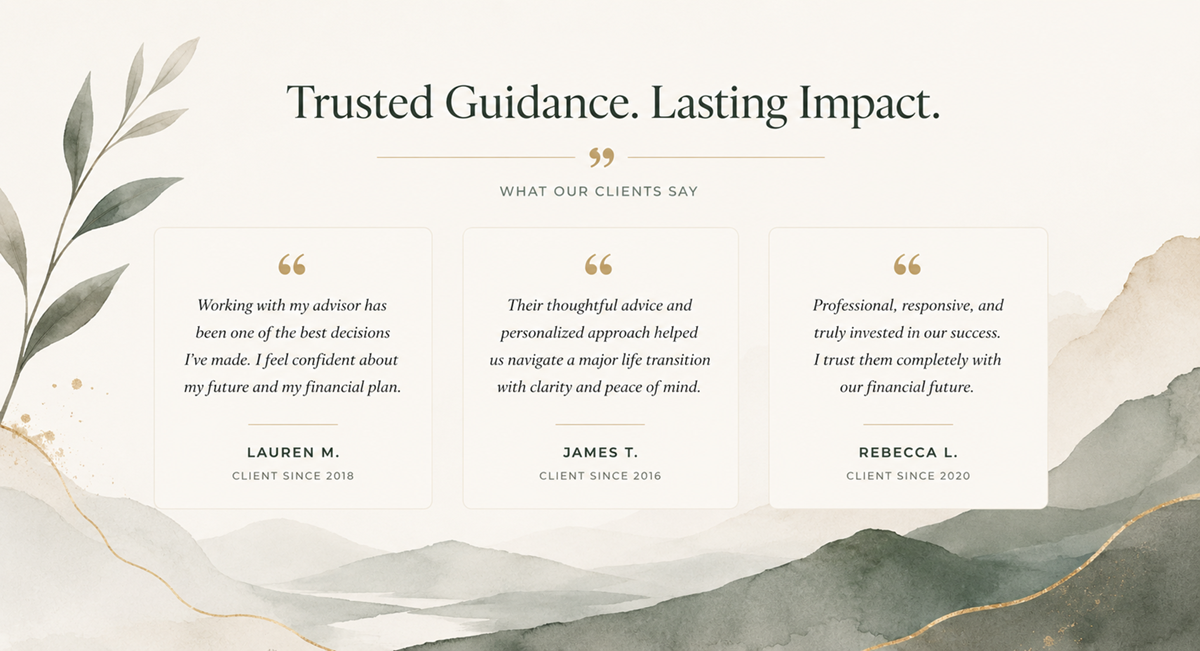
Download the Testimonial Policy Template
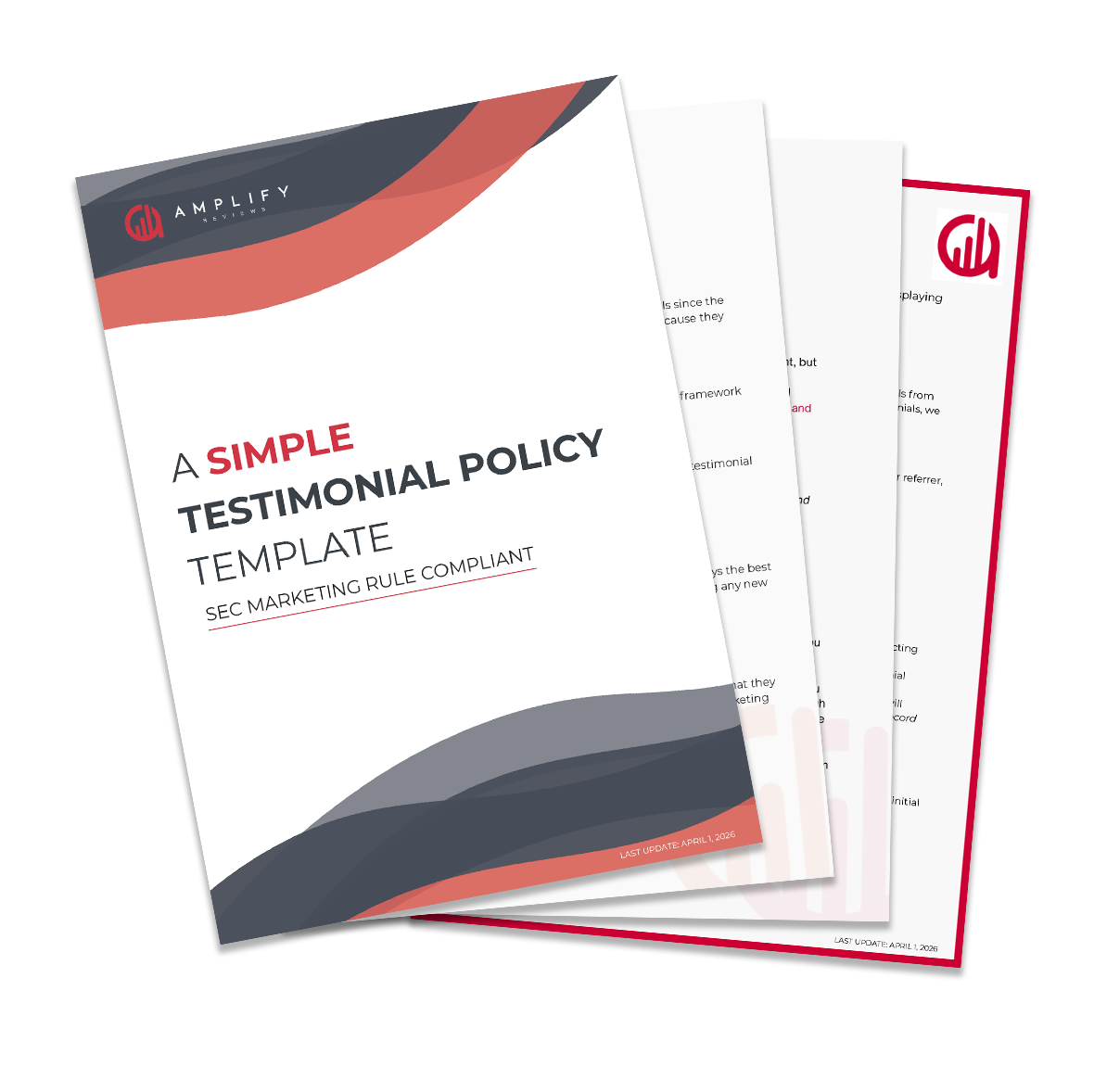
If you're ready to explore testimonials as part of your marketing strategy, download the Testimonial Policy Template.
This template can help you create a simple written policy that your firm can customize with compliance before launching any testimonial marketing activities.
Download the Testimonial Policy Template and take the first step toward using client testimonials with greater clarity, confidence, and consistency.
Disclaimer: This template is for informational purposes only and should not be considered legal or compliance advice. Always consult your compliance officer, legal counsel, or supervisory team before initiating any new marketing activity.
Written by our Partners at Amplify Reviews